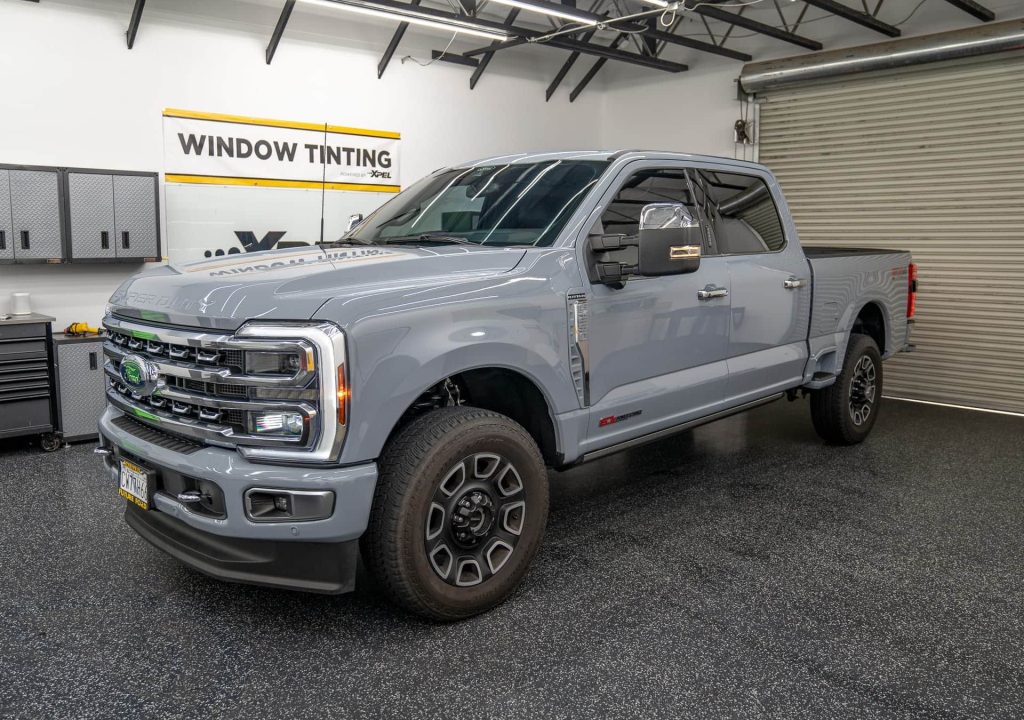
It is early March 2026 and Fresno is still sitting in mild temperatures. That is exactly why right now is the best time to think about window tint. Not July, when every shop in the Central Valley has a two-week wait and you are already suffering through 110-degree commutes. Right now, before the heat arrives, is when you can get the job done on your schedule and have the film fully cured before summer starts.
Because when summer does arrive, it does not ease in. Unshaded vehicles parked at River Park or Old Town Clovis in July regularly hit interior temperatures of 145 to 160 degrees Fahrenheit within an hour. Steering wheels become too hot to grip. Leather starts cracking season by season. And every afternoon commute on Highway 99 turns into a glare-and-heat endurance run. That is the environment ceramic window tint was built for.
The Fresno Heat Problem: What the Numbers Actually Mean
March in Fresno is deceptive. Afternoons are warm but manageable, and it is easy to put off anything that feels like summer prep. But the window between now and the first 100-degree day in late May or June is short, and it closes fast.
Fresno County has logged summers with more than 60 days above 100 degrees Fahrenheit, topping out at 114 degrees. In July, the city averages 14 hours of sunshine per day and a UV Index that holds steady at 10 or above. That puts it in the “Very High” category, the same tier as high-altitude locations in summer or regions near the equator.
For drivers, this plays out in ways that go beyond being uncomfortable. A car parked at River Park or Old Town Clovis on a July afternoon can hit interior temperatures between 145 and 160 degrees within an hour. Steering wheels become genuinely painful to touch. Leather seats crack and fade season by season. Dashboard plastics warp over time and release odors from off-gassing. Child car seats can reach temperatures that cause skin burns on contact.
Then there is the air quality angle. The combination of heavy agricultural dust and Valley smog creates a layered glare effect, particularly on Highway 99 and Highway 168 during afternoon hours. Sunglasses help, but they do not address the light pouring in through the glass on your left, right, and above you. That glare is a real safety issue, not just an annoyance.
All of that is the environment that makes ceramic window tint in Fresno a smart investment rather than a cosmetic one.
Ceramic Tint vs. Standard Dyed Film: What the Performance Data Shows
The average car in Fresno with tint on it has standard dyed polyester film. It makes the glass darker, cuts some visible glare, and costs less upfront. On paper, that sounds reasonable. But when you compare the actual heat and UV performance numbers, the difference between dyed film and ceramic film is not subtle.
Infrared Heat Rejection (IRR)
Infrared radiation is the part of sunlight you feel as heat on your skin and arms. Standard dyed films block roughly 30 to 45 percent of infrared energy. Premium ceramic films, which use nano-ceramic particles embedded in the film rather than dye, reject up to 95 to 98 percent of infrared heat.
Put your hand against a ceramic-tinted window on a 110-degree day and you will feel almost nothing coming through. That is the real-world difference between a car that punishes you the moment you sit down and one that has already taken the edge off before the AC kicks in.
Total Solar Energy Rejection (TSER)
TSER is the broadest measure of film performance. It accounts for visible light, UV, and infrared radiation together. Ceramic films typically hit 60 percent TSER or better. Basic dyed films rarely crack 35 percent. Over a Fresno summer, that gap has a direct effect on how hard your air conditioning works, how much fuel or battery range you use fighting cabin heat, and how fast your interior ages.
UV Protection: What the Skin Cancer Foundation Says
Quality ceramic tints block 99.9 percent of UVA and UVB rays. To put that in context, the protection level is roughly equivalent to SPF 1,000 sunscreen applied to every window in your vehicle. The Skin Cancer Foundation officially recognizes certain window films as a recommended UV protection measure, because standard automotive glass offers almost no UV filtering on its own.
For Fresno commuters spending 45 minutes to an hour each way on Highway 99 or 168, the UV exposure through an unprotected driver-side window adds up quickly. That same exposure is what causes your leather and vinyl to break down year after year. Ceramic tint cuts that process off at the source.
Signal Clarity: Why This Matters for Modern Vehicles
Ceramic film contains no metal. That is worth noting because older metallic tint films, and some budget options still being sold today, can disrupt GPS accuracy, 5G reception, keyless entry, and tire pressure monitoring systems.
If you drive a Tesla, BMW, Audi, or any vehicle with built-in connectivity features, metallic film creates real problems. Ceramic film lets all of those signals pass through without interference, which is one reason it has become the go-to option for newer and higher-end vehicles.
California Window Tint Law in 2026: The Fresno Driver’s Quick Reference
California Vehicle Code 26708 sets the rules, and it is worth knowing them before you book an appointment. Here is how it breaks down:
- Windshield: A non-reflective strip along the top 4 inches (the AS-1 line) is what the law allows. That said, clear ceramic film in the 70 to 80 percent VLT range is a widely used option for full-windshield heat and UV rejection that does not visually darken the glass.
- Front Side Windows: Must pass at least 70 percent Visible Light Transmission. This does not mean you get nothing from ceramic film on the front windows. You still get strong infrared and UV rejection within a legal, light-transmission spec.
- Rear and Back Windows: Any tint level is allowed as long as the vehicle has dual side mirrors. This is where you have the most room to push heat rejection as far as the film will go.
Fix-it tickets in Fresno and Clovis for front windows that do not meet the VLT requirement start at around $25 and can go above $200 for repeat violations, on top of the cost to strip and replace the film. Getting the spec right the first time with a shop that knows California law means you will never have that problem.
Shops that handle ceramic window tint for Fresno neighborhoods like Woodward Park and Bullard are familiar with the local enforcement environment and can walk you through exactly what is and is not legal for your specific vehicle.
Interior Preservation: The Cost Case for Ceramic Tint
Think of ceramic tint as sunscreen for the inside of your car. UV exposure and heat are the two biggest factors in how fast a vehicle interior ages. Cracked dashboards, faded leather, brittle trim pieces, and sun-bleached fabric are all UV and heat damage that built up over years of unprotected sun exposure.
If you bought a luxury vehicle, a performance car, or simply a daily driver you want to sell in four years without it looking like it spent its life in a desert, the return on ceramic tint is clear. Paired with a good paint protection film package on the exterior, you are covering the vehicle on both sides against what the Central Valley climate does to cars year after year.
It is also worth pointing out that March is one of the best months to have ceramic tint installed. The film cures faster in moderate temperatures than in extreme heat, and shops are less backed up than they will be from May through August. If you have been thinking about it, this is the practical window to get it done before the season changes.
A full ceramic tint installation is a one-time cost that lasts the life of the vehicle. Replacing a cracked dashboard, re-dyeing faded leather, or buying new floor mats because yours have sun-bleached to nothing costs a lot more.
Fresno Neighborhoods and Why Location Changes the Conversation
Fresno is not one uniform driving environment. Neighborhoods have different heat profiles, commute patterns, and sun exposure throughout the day. Drivers in Tower District and Downtown Fresno deal with urban heat island effects from dense asphalt and concrete. Those in Fig Garden and Old Fig Garden have longer stretches on wide, sun-exposed arterials with less shade cover.
Areas like Herndon, Hoover, and Sunnyside tend to see some of the highest afternoon temperatures in the metro, partly because of reduced tree canopy and large commercial parking areas that hold and radiate heat. The need for real heat rejection is the same across the city. What changes is the film spec that makes the most sense for each vehicle and use case.
Drivers in Sierra Sky Park and Roosevelt neighborhoods face their own sun patterns, and a shop that knows the local area can help you pick the right film rather than just defaulting to whatever is on the shelf.
Pairing Ceramic Tint With Other Vehicle Protection
More Fresno vehicle owners are combining window tint with other protection services, and it makes practical sense. Ceramic coatings on the exterior paint use a similar science-based approach, building a UV-resistant, hydrophobic layer over the clearcoat that keeps dust and road grime from bonding to the paint surface.
Combining ceramic window tint with paint protection film (PPF) on the exterior gives the vehicle full coverage against both sun damage and road hazards: rock chips on the hood and front bumper, door dings in parking lots, and the fine abrasive dust that blows in from the ag corridor around Fresno on dry, windy days.
For anyone looking to do a full protection package, financing options are available so you can do it right without having to pick and choose what to skip.
The Bottom Line
Fresno and Clovis drivers are not shopping for luxury when they ask about ceramic tint. They are shopping for a practical answer to a real problem. Over 60 days above 100 degrees. UV indexes in the “Very High” range for months at a stretch. Interiors that cook while you are inside working. Glare on Highway 99 that makes afternoon commutes genuinely uncomfortable and at times unsafe.
Premium ceramic window film addresses all of that. Nano-ceramic particles reject the infrared heat your AC is fighting. They block the UV that ages your interior and your skin. And unlike older metallic films, they do not touch your GPS, your 5G signal, or your keyless entry. The film works. It is legal in California when spec’d correctly. And it pays for itself over time in comfort, health, and resale value.
The sun in the Central Valley does not ease up. Good news is, neither does the right film.
It is March 2026. Fresno has a few weeks of reasonable temperatures left before the heat season starts. That is a genuinely good time to get this done, before shop schedules fill up and before the first heat wave makes you wish you had booked sooner.
Ready to get it done? Contact Apex Films Fresno to book a consultation and find the right ceramic film spec for your vehicle. You can also browse the full range of services, from ceramic window tint to paint protection film, to see what makes sense for your situation.